

SHENZHEN, Tiongkok – Huawei Digital Power has officially launched the 10 Smart PV & ESS Trends 2026 under the theme “All-Scenario Grid-Forming, Unleashing AI, and Forging Excellence: Advance Renewables as Main Energy Sources.” The launch underscores Huawei’s commitment to advancing renewable energy—covering solar photovoltaic (PV), wind power generation, and energy storage systems (ESS)—as reliable, stable, and high-quality primary energy sources.
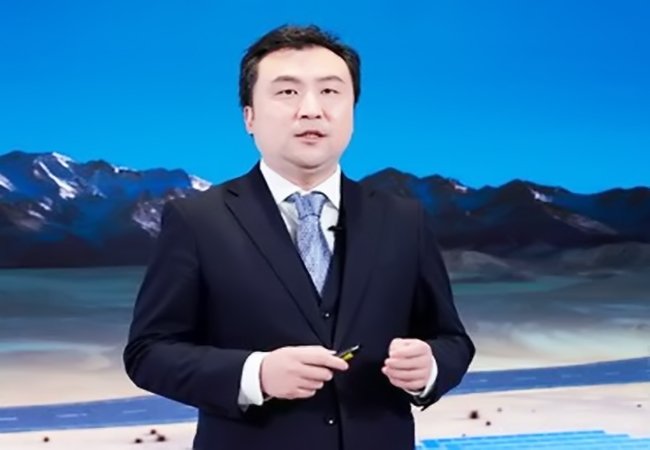
At the event, Eric Zhong, Vice President and Chief Marketing Officer of the Smart PV & ESS Product Line at Huawei Digital Power, presented the ten strategic trends and released an official white paper that delivers in-depth analysis and practical pathways for the industry to accelerate the transformation of power systems based on renewable energy.
Zhong explained that the renewable energy industry is no longer focused solely on isolated technological breakthroughs, but rather on creating broader value through integrated development. Drawing on Huawei’s experience and expertise in PV and ESS, the company has identified ten key trends expected to shape the industry in 2026 and beyond.
The first trend highlights the synergy of PV + wind power + ESS as the foundation for predictable, controllable, and stable renewable power generation. Going forward, utility-scale power plants are required to meet two core pillars—stable power output and controllable costs—along with three key elements: the ability to operate independently with 100 percent renewable energy, intelligent and integrated collaboration, and high security and quality throughout the entire operational lifecycle.
The second trend positions grid-forming ESS as a central pillar for power system stability and balance. This technology will see broader adoption to mitigate renewable energy fluctuations, enhance supply reliability, participate in energy markets, and provide ancillary services such as frequency regulation and peak shaving.
The third trend emphasizes the importance of synergy among power generation, power grids, load management, and ESS. Supported by AI-based intelligent dispatch, cross-system coordination can be achieved more efficiently, strengthening regional energy autonomy while enhancing global integration.
In the residential segment, the fourth trend points to a shift from AI-assisted systems to fully AI-integrated PV + ESS solutions. AI is no longer merely an add-on feature, but is embedded into product design, user experience, and operations and maintenance, delivering an optimal energy experience.
The fifth through seventh trends focus on increasing power density, transitioning to high-voltage architectures to reduce the levelized cost of energy (LCOE), and the critical role of system-level battery management. Huawei emphasized that batteries should not be equated with ESS, as digital management from the cell level to the system level is essential to ensuring safety, longevity, and operational stability.
Meanwhile, the eighth and ninth trends highlight advancements in grid-forming technologies and the role of AI agents in driving automation across renewable power plants through cloud–edge–device synergy. The tenth trend concludes with an emphasis on security quantification, as the ESS industry shifts from sample-based inspections to comprehensive, full-lifecycle evaluations to raise safety standards.
Through the release of the 10 Smart PV & ESS Trends 2026, Huawei Digital Power reinforces its vision of building a smarter, safer, and more sustainable renewable energy ecosystem, while accelerating the global energy transition toward a low-carbon future.
Source : Huawei Digital Power